

1. Ingest the surface
Gecko parses an OpenAPI 3.x document (YAML or JSON) into a normalized list of operations. It resolves local$refs with cycle and depth guards — on a cycle or
when the depth cap is hit, the $ref is left in place rather than expanded, so callers
still get a usable (if shallow) schema. Path-level parameters are merged into each
operation’s own parameters.
Each Operation carries: method, path, operation_id, summary, description, tags,
parameters, request body, responses, and security. Each Param carries: name,
location, required, schema, description.
Ingest reads the surface only — method, path, params, request/response schemas.
It never reads or stores response data. The ingestor is stdlib + PyYAML by design, so
it runs anywhere with zero heavy dependencies.
2. Catalog — intent to endpoint
The catalog lets an agent go from a natural-language goal to the right endpoint. It scores each operation by lexical overlap between the query and the operation’s surface text — summary, description, path, tags, and id — with summary matches weighted double (it’s the most intent-bearing field). Results are ranked and returned.3. Comprehend — the question-shaped tool
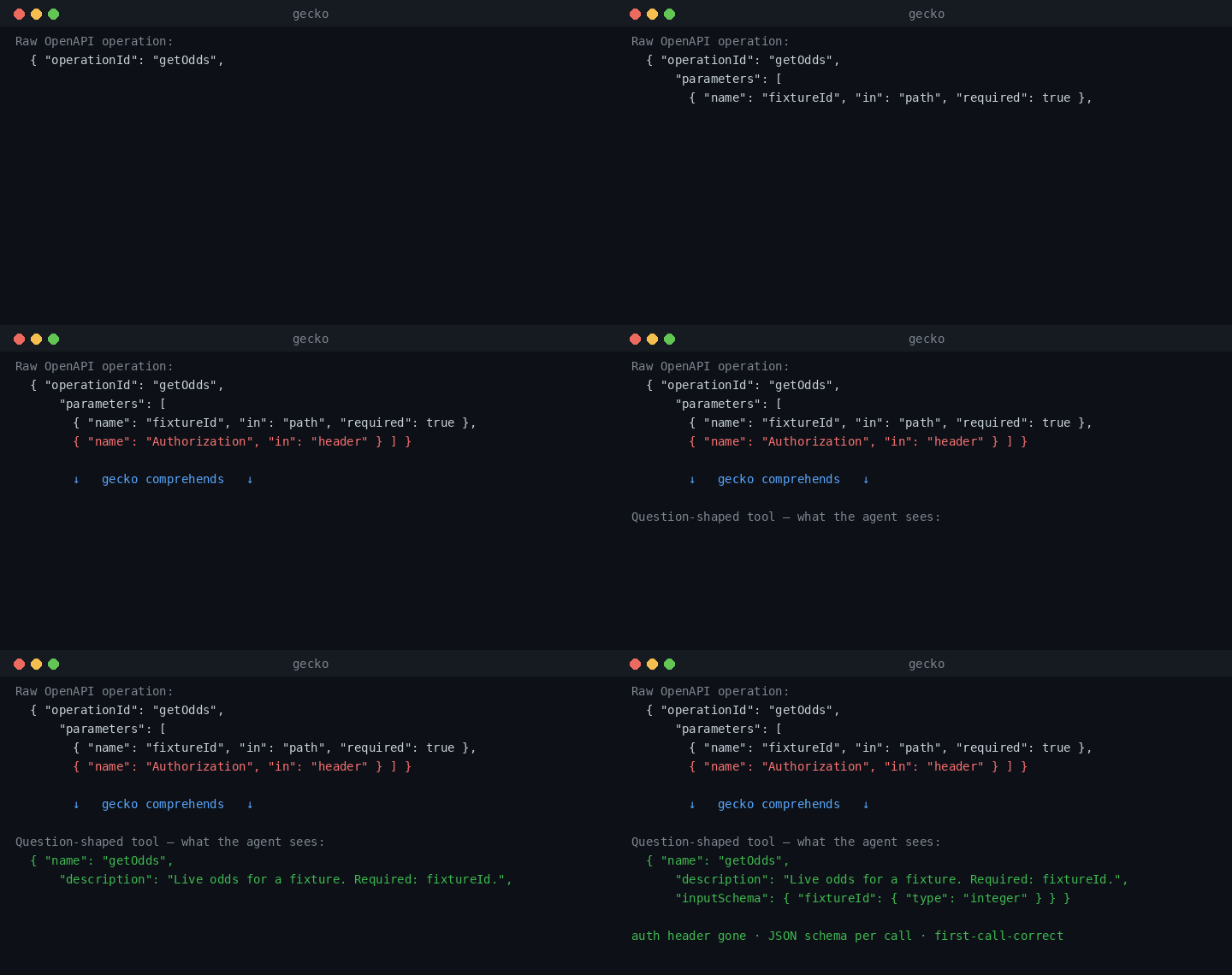
Each operation becomes an MCP-compatible tool definition: a name, a question-shaped description, and a JSON-Schema input. Two decisions make this more than a raw OpenAPI dump: Hide the plumbing. Auth headers (Authorization, X-Api-Token, and similar) are
stripped from the agent-facing input. The agent reasons only about decision-relevant
inputs; the access layer injects credentials at call time.
Carry invocation metadata. The tool keeps an internal _invoke block — method,
path, and the location of each parameter — so the caller can build the real HTTP
request without re-parsing the spec.
A generated tool looks like:
requires_auth is true only when every way to call the operation needs auth (an
OpenAPI security requirement of {} means “no-auth is also acceptable”, which keeps
it optional). The client uses requires_auth + the session to hide operations a
no-auth session could never satisfy, so the agent never wastes a call on them.
4. Build the correct request
When the agent calls a tool, the caller places each argument by its location, injects the hidden auth headers, and assembles the request. Crucially, it catches the silent first-call failure — for example a missing required path parameter raises a typedCallError instead of firing a malformed request the agent can’t diagnose.
Measuring first-call-correct
Gecko ships a falsifiable scorecard. Given a client and a list of{goal, expect_op, args} tasks, it measures whether the comprehension layer retrieves
the right operation (top-1 / top-5) and builds a well-formed request for it — recorded
and offline, recording only outcome metadata (tool, rank, ok/reason), never
payloads.
scripts/pegana_eval.py worked example in the repo, which ingests a public peg-state
API with a no-auth session and scores first-call-correctness, including correctly
refusing to fire an auth-gated operation on a public read). It’s evidence the
engine is API-agnostic, not a claim that Gecko one-shots every API.